
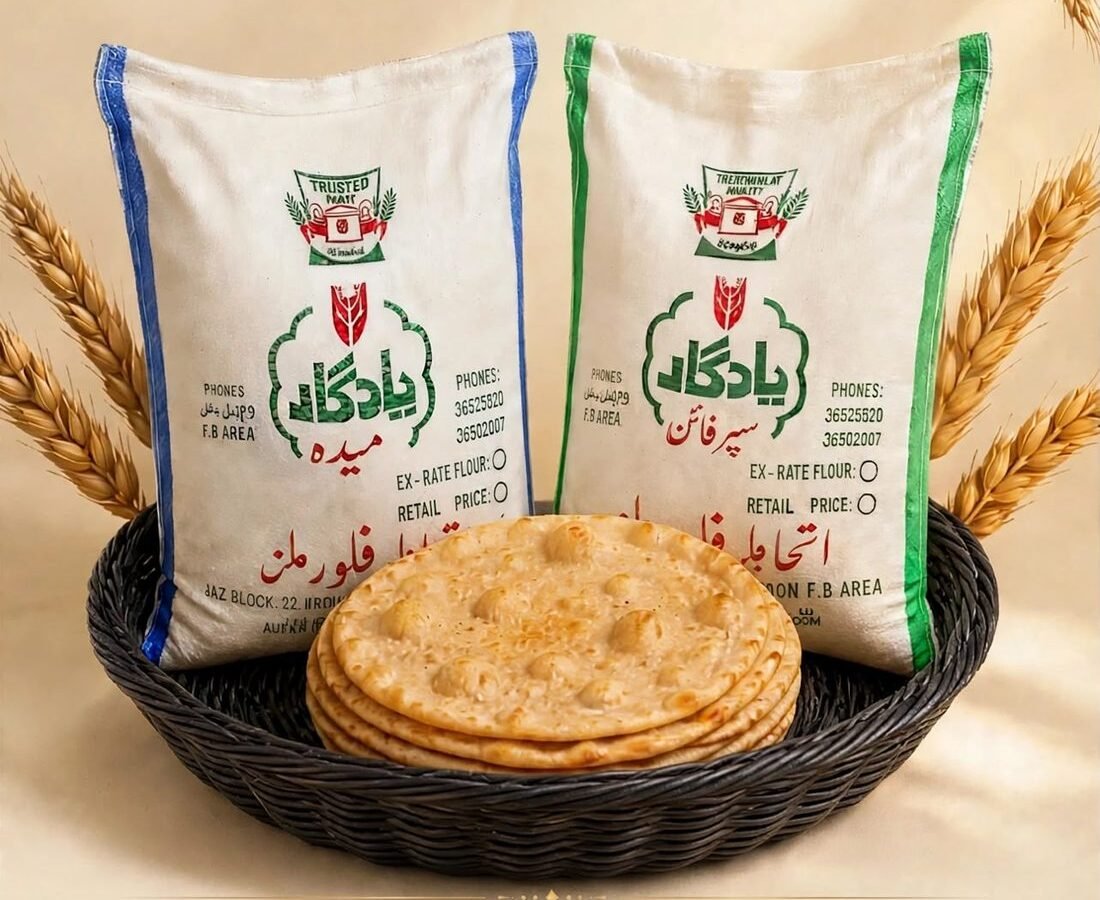
Look at the top of any sack we pack and you will find the fortified flour mark. Buyers ask us about it often, usually with some version of the same question: what has been added to my flour, and why.
The short answer is three micronutrients, added in tiny quantities, because flour is the one food almost every household in Pakistan eats every single day. That makes it the most efficient way to reach people who would otherwise miss out.
What is actually added
A micronutrient premix is dosed into the flour stream by a small feeder as it leaves the milling section, before packing. The quantities are measured in parts per million. The premix carries:
- Iron. Iron deficiency anaemia remains widespread among women and young children in Pakistan. It causes tiredness, breathlessness, poor concentration and, in children, slower development.
- Folic acid. Taken by women before and during early pregnancy, folic acid substantially reduces the risk of neural tube defects such as spina bifida in newborns. The window in which it matters is often before a woman knows she is pregnant, which is exactly why putting it in an everyday food works better than relying on supplements.
- Zinc. Zinc supports growth, wound healing and immune function, and matters most for young children.
The World Health Organization summary of wheat flour fortification sets out the evidence behind each of these. For a country by country picture of which fortification standards are in force, the Global Fortification Data Exchange is the clearest public source.
Why it happens at the mill
Fortification only works if it reaches people without asking them to change anything. Nobody has to remember to take a tablet, buy a special product or pay more. The flour is bought as it always was, and the nutrients arrive with it.
Doing it at the mill also means the dosing can be controlled and checked. A feeder set to a fixed rate against a known flour flow is far more reliable than anything that could be attempted further down the chain.
Does it change the flour
No. The quantities are far too small to affect taste, colour, smell or the way a roti puffs on the tawa. If you switched from an unfortified flour to a fortified one without being told, you would not notice at the table. Bakers will not need to change a recipe, and absorption rates are unaffected.
It also does not change the price to the household. The cost of the premix is a fraction of a rupee per kilo.
What fortification does not do
It is worth being honest about the limits. Fortified flour is not a treatment for anaemia, and it is not a substitute for a varied diet or for medical advice. It raises the floor across a whole population by a small amount every day, which over years adds up to a meaningful difference. That is the whole design.
Anyone with a diagnosed deficiency should be guided by a doctor, not by a flour sack.
How to tell if flour is fortified
Look for the fortified flour logo printed on the bag. On our sacks it sits at the top of the printed panel, above the brand mark, alongside the packed weight and the mill address. Flour sold loose from an open bin gives you no way of knowing what it is or when it was milled, which is one of several good reasons to buy a sealed sack.
You can see the mark on the sacks across our product range, and read about where the dosing sits in the milling sequence on the milling and quality page.
The point of it
A flour mill is an unglamorous business. It grinds wheat, fills sacks and sends them out. Fortification is one of the few points where that ordinary work quietly does something more, and it costs the family buying the bag nothing at all. That seems worth explaining on the website rather than leaving it as a logo nobody reads.
If you supply flour onward and want the fortification details for your own labelling or tender paperwork, get in touch with the mill office.