
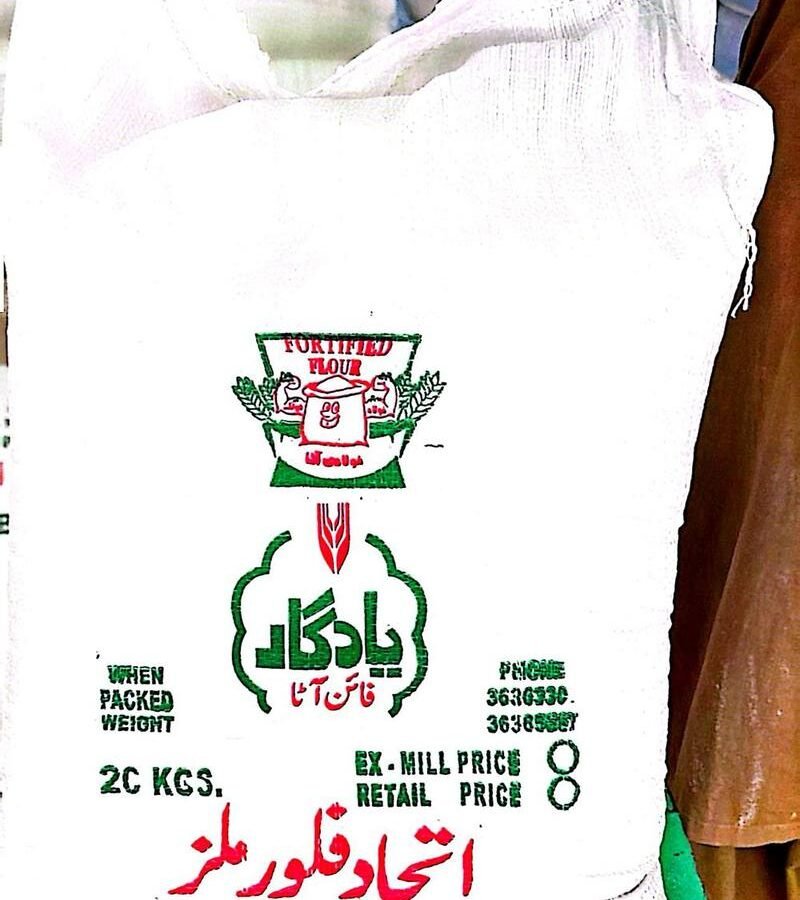
Every flour mill hears the same complaint at the end of a long summer. The sack was fine when it was opened, and three weeks later the roti tastes flat and the flour has gone lumpy near the bottom. Almost every time, the flour left the mill in good condition and the storage did the damage. Karachi sits in a coastal humidity belt, and flour draws moisture out of the air through the weave of the sack.
None of the advice below is complicated. It is the same handful of habits that a good kiryana store already follows, written down so a household can follow them too.
Get the sack off the floor and away from the wall
A concrete floor is cooler than the room, which means moisture condenses against anything resting on it. Put the sack on a wooden plank, a pallet or even two bricks and a board, with a gap of at least a few inches underneath. Keep it a hand’s width clear of the wall so air can move around all four sides.
Warehouses stack in rows with aisles between them for exactly this reason. A kitchen store cupboard can copy the idea at a smaller scale.
Choose a sack size you can finish in a month
The cheapest flour per kilo is not the cheapest flour if you throw away the last quarter of the sack. Flour is at its best in the weeks after milling, and once it is open the clock speeds up.
A couple or a small family will usually be better served by a 10 kg sack than a 20 kg one, even though the bigger sack looks like better value on the shelf. A joint family that gets through a sack every few weeks is the right buyer for 20 kg. Our full range of packing weights, from 10 kg up to the 50 kg wholesale unit, is set out on the products page.
Keep flour away from strong smells
Flour absorbs odours. Detergent, phenyl, paint, kerosene, onions, garlic and fresh spices will all transfer through a woven sack given a few days of contact. The mistake is nearly always a storeroom where cleaning supplies and food share a shelf.
If you can smell something in the room, your flour can too. Store it somewhere that smells of nothing.
Close the mouth of the sack properly
Once a sack is open, fold the top over twice and tie it, or decant into an airtight container. A steel or food grade plastic drum with a lid is ideal, and it also solves the second problem in a Karachi kitchen, which is insects and rodents.
If you decant, wash and dry the container completely between sacks. Old flour left in the corners of a bin is where the trouble starts, because it goes rancid first and then taints the fresh flour poured on top.
Rotate your stock, oldest first
Shops call this first in, first out, and it costs nothing. When a new sack arrives, put it behind or under the one already open, not in front of it. A household that buys two sacks at a time should mark the purchase date on each with a marker pen.
Watch for the three warning signs
- Caking. Hard lumps that do not break apart under a spoon mean the flour has taken on moisture. Small soft lumps are normal and will sift out.
- Smell. Fresh atta smells faintly sweet and nutty. A sour, musty or crayon like smell means the natural oils in the germ have gone rancid.
- Movement. Weevils and flour moths are a storage problem, not a milling one. They arrive from other stored grain in the house, so check the rice and the lentils at the same time.
Flour that has caked hard or smells sour should not be rescued for eating. It is a small loss compared with a batch of dough that will not rise or a tray of roti nobody wants.
A note for tandoors and bakeries
Commercial storage follows the same rules at a larger scale, with two additions. Keep stacks no more than the recommended height for the sack type so the bottom layer is not compressed, and keep a clear record of delivery dates on each pallet. If your dough behaviour changes suddenly, the delivery date on the pallet is the first thing worth checking before you blame the flour.
The FAO guidance on grain and flour storage covers the underlying principle in more detail, which is that temperature and moisture together, rather than either one alone, decide how long a milled product keeps.
The short version
Off the floor, away from the wall, away from strong smells, closed properly, oldest first, and in a size you will actually finish. Do that and the flour you open in week four will taste like the flour you opened in week one.
If you buy in volume and want to talk through delivery frequency so that you hold less stock at a time, speak to the mill office. Smaller, more frequent deliveries are usually cheaper for a business than a storeroom full of ageing sacks.